Trash segmentation with Yolo
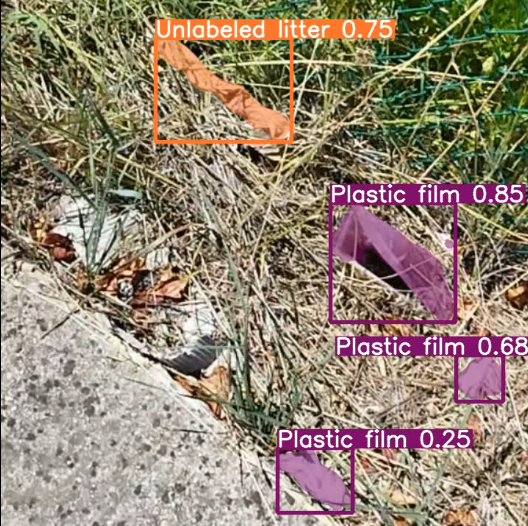
Addressing the challenge of waste management is becoming increasingly important, and technology is playing a key role in making this process more efficient. In this article, we’ll explore how to build a trash segmentation algorithm using YOLO (“You Only Look Once”), a fast and accurate object detection model, alongside TACO (Trash Annotations in Context), a dataset designed specifically for trash detection.
We’ll discuss how the TACO dataset aligns with the widely-used COCO dataset format and guide you through the necessary steps to convert the data for compatibility with YOLO’s segmentation training. After that, we’ll demonstrate how to train the YOLO-seg model on Google Colab, a cloud platform that provides powerful GPUs without requiring local hardware. Finally, we’ll analyze the results to evaluate the performance and practical insights from the model.
If you’re interested in applying AI techniques to environmental challenges, this article offers a clear and practical walkthrough of creating an effective trash segmentation system.
Yolo
YOLO (You Only Look Once) is a family of real-time object detection models that frame detection as a single regression problem, predicting bounding boxes and class probabilities directly from the input image in one pass. This approach makes YOLO extremely fast and efficient compared to two-stage detectors, while still maintaining good accuracy.
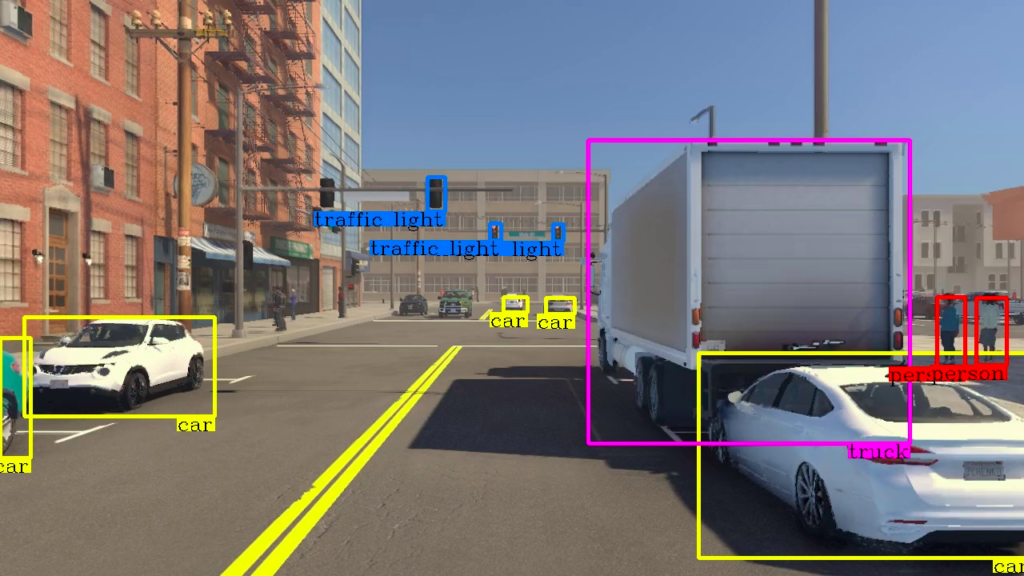
Recent versions of YOLO extend beyond bounding box detection to support instance segmentation, where the model not only identifies the location and class of an object but also generates a precise pixel-level mask. This capability is particularly useful in scenarios that require detailed shape information, such as medical imaging, robotics, and industrial quality inspection. YOLO segmentation combines the speed of the original architecture with the fine-grained output of segmentation models, making it a practical choice when both accuracy and efficiency are critical.
Yolo dataset format
TACO
TACO dataset format
TACO dataset convertion
Yolo-seg training
Results
def print_hi(name):
  print(f"Hi, {name}\n")
print_hi('Tom')